.svg)


The Greater Mekong Subregion comprises Cambodia, the People's Republic of China (specifically Yunnan Province and Guangxi Zhuang Autonomous Region), Lao People's Democratic Republic (PDR), Myanmar, Thailand, and Viet Nam. Notably, China has officially achieved malaria-free certification from the World Health Organization in 2021.
Collectively, the Greater Mekong Subregion (GMS) has made outstanding progress towards eliminating malaria, with a 70% decrease in cases from 2012 to 2024, according to data from the World Malaria Report 2025. Of the six GMS countries, Cambodia, Lao People's Democratic Republic (PDR), and Viet Nam have made significant progress towards elimination. A decade ago, Lao PDR recorded 50,674 indigenous cases, marking a 15-year high for the country. In 2024, the country recorded a mere 328 cases, a reduction of more than 99%. This decrease is similarly echoed by Cambodia and Viet Nam, both of which achieved reductions of 99% and 98% respectively.
Malaria epidemiology in the GMS
The GMS’ malaria elimination journey is inextricably tied to Myanmar’s, which has the region’s highest indigenous case numbers. Despite an 88% decrease in indigenous cases from 2012 to 2020, the country’s civil conflict the following year led to a 289% spike in cases over the next three years. Despite ongoing challenges, Integrated Community Malaria Volunteers continued to provide testing and treatment within remote areas, which reignited the country’s case reduction in 2024.

During the three-year spike in Myanmar, neighbouring Thailand observed a 278% increase in cases, underscoring the impact of active cross-border mobility across the 2,400-kilometre boundary. The concentration of P. vivax cases in border regions has resulted in reports of increasing threats of antimalarial drug resistance, which is a clear risk to Myanmar’s elimination goals.
While several species of Plasmodium can be found across the GMS, P. falciparum and P. vivax are the most prevalent in the region. P. falciparum has been a central focus of regional elimination efforts, with the region’s overall decline in cases largely driven by this focus. In 2024, the GMS recorded 16,799 cases, down from a 15-year high of 472,624 in 2011 – a stunning 96% decrease.

Elimination efforts surrounding P. vivax, on the other hand, have seen mixed progress, with the parasite still posing significant challenge to the region’s aspirations. An initial surge in cases from 49,970 to 187,460 from 2011 to 2012 preceded with a subsequent fall in case numbers, to 57,644 in 2020. Against the backdrop of civil conflict in Myanmar, P. vivax saw a resurgence from 2021 to 2023, during which 197,816 cases – a 15-year high – were collectively recorded in 2023. It is worth noting that Myanmar represents an outlier in relation to P. vivax cases, as the rest of the GMS’ malaria-endemic countries recorded significantly fewer cases.

Funding in the GMS
Progress towards malaria elimination in the GMS is testament to the region’s strong political commitment and effective leadership, as well as significant financial support from The Global Fund and other international development partners. Notably, the Regional Artemisinin-resistance Initiative (RAI) established in 2014 as a regional grant to accelerate the elimination of P. falciparum malaria in the GMS – has helped to reduce the region’s malaria burden over the years.
Unfortunately, changes to the funding landscape have prompted a need to rethink existing elimination strategies. Figures from the Global Fund’s 2023-2025 cycle indicate a broad reduction in RAI funding, with Lao PDR remaining the only malaria-endemic country in the GMS to receive increased funding (USD 16 million, compared to USD 12 million in the 2020-2022 cycle). More broadly, the reduction in global health aid from the United States and declining levels of assistance from Europe have spotlighted the region’s critical need for transition planning.
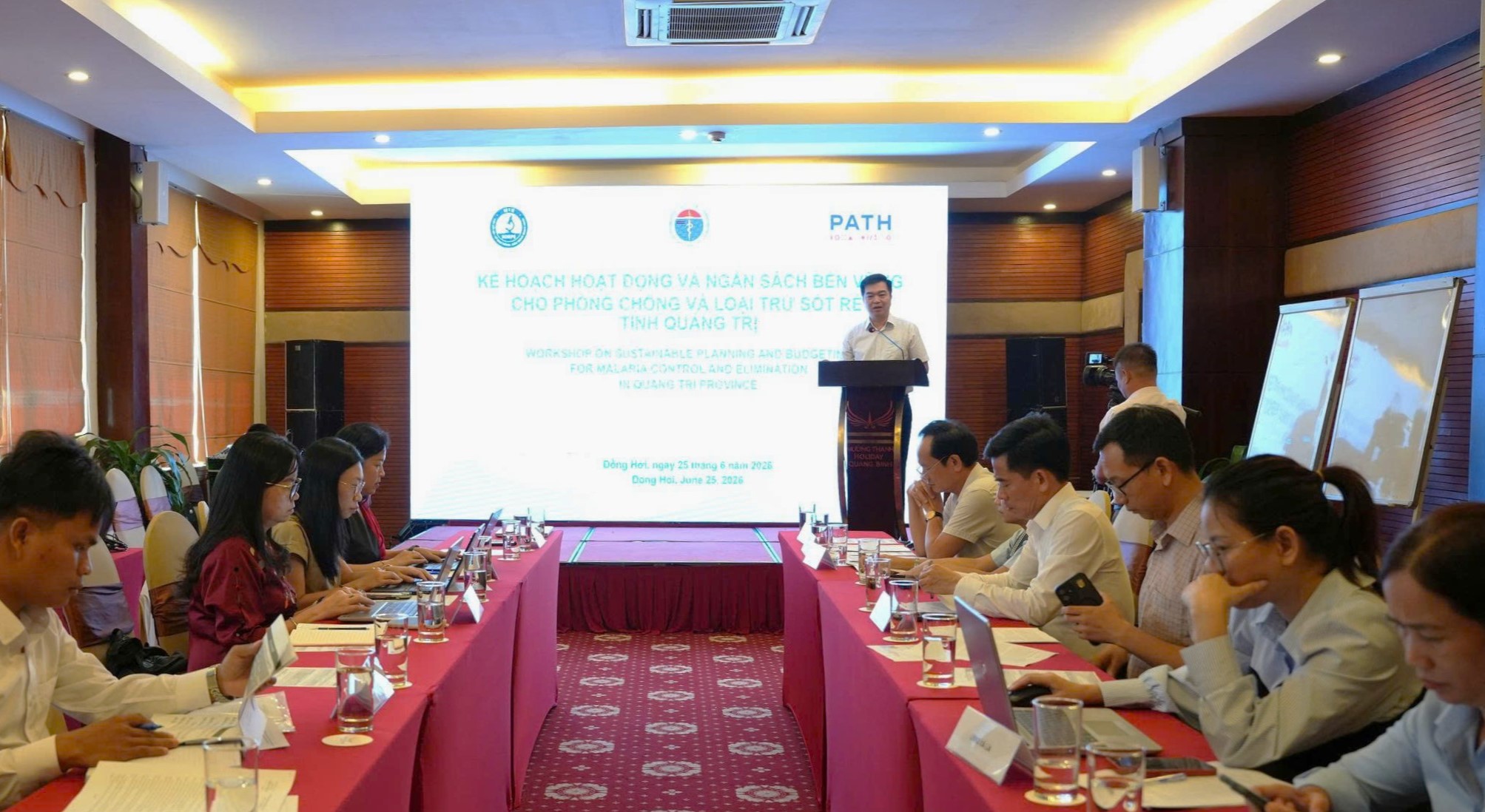
In response, Cambodia and Lao PDR carried out transition assessments in 2024 and 2025 respectively, with the aim of maintaining their strong progress towards elimination while sustaining zero transmissions in the context of a shrinking donor landscape. Prior transition assessments were also carried out in Thailand and Viet Nam, in 2018 and 2021 respectively. The findings from these assessments have accelerated increased integration and interoperability that have been written into their respective Transition Roadmaps. These proactive steps provide a foundation to ensure that progress achieved up to this point will be sustained, and not derailed.
Antimalarial drug resistance in the GMS
Despite the differences in case burdens, the six countries of the GMS remain acutely aware of the threats of antimalarial drug resistance, ever since the first reports of artemisinin resistance emerged from Cambodia in 2008. The rise of drug resistance in the region over the following years turned the GMS into the world’s epicentre of multidrug-resistant P. falciparum, a problem that was mitigated by RAI coordination and funding. Through interventions coordinated by RAI, case numbers and deaths saw significant reductions, with the improvements in Cambodia, Lao PDR, and Viet Nam attributed to it. In early 2025, however, the United States Agency for International Development (USAID) called a halt to their foreign aid contributions, which had up to that point played a significant role in reducing the spread of artemisinin resistance.
Antimalarial resistance has prompted research into radical cures both within and beyond the GMS, with countries turning to innovative approaches in the fight against malaria. While helpful, radical cures presently remain far from being a silver bullet. Studies conducted across the GMS indicate that systemic, infrastructural, and environmental barriers persist in the form of cost, regulatory approval, and heat sensitivity of G6PD tests, which continue to constrain village malaria workers’ ability to conduct testing required for the safe deployment of primaquine and tafenoquine.
While the spectre of drug resistance looms across Viet Nam, the country’s 239 indigenous cases in 2024 were an impressive 99% decrease from 2012, when 19,638 cases were recorded. As the country enters the final stages of its elimination journey, its main challenge to elimination is infrastructure, with malaria endemic areas concentrated in hard-to-reach areas. Over the last decade, studies in Cambodia, Thailand, and Viet Nam have contributed to studies on primaquine and tafenoquine, with the latter now included in updated malaria treatment guidelines. In carrying out studies of their own, they are collectively contributing towards a blueprint for countries in the GMS and beyond to integrate radical cures into existing strategies as they become viable.
Outlook for the GMS
The GMS now has every opportunity to integrate its malaria elimination efforts more strongly into health systems than ever before, while building on the momentum accumulated over years of research into radical cures. Despite shocks to the system in the form of funding disruptions and surging cases in some of its member states, there remains every expectation that the GMS will achieve its elimination goals sooner rather than later.
Explore APLMA Dashboards here: https://www.aplma.org/ourwork/dashboard.
You may also like